The Ocean Race Atlantic 2026 — New York to Lorient
Six IMOCA yachts are racing across the Atlantic in the first edition of a new event. Who is sailing, how the race stands as we publish, and where the whole thing came from.
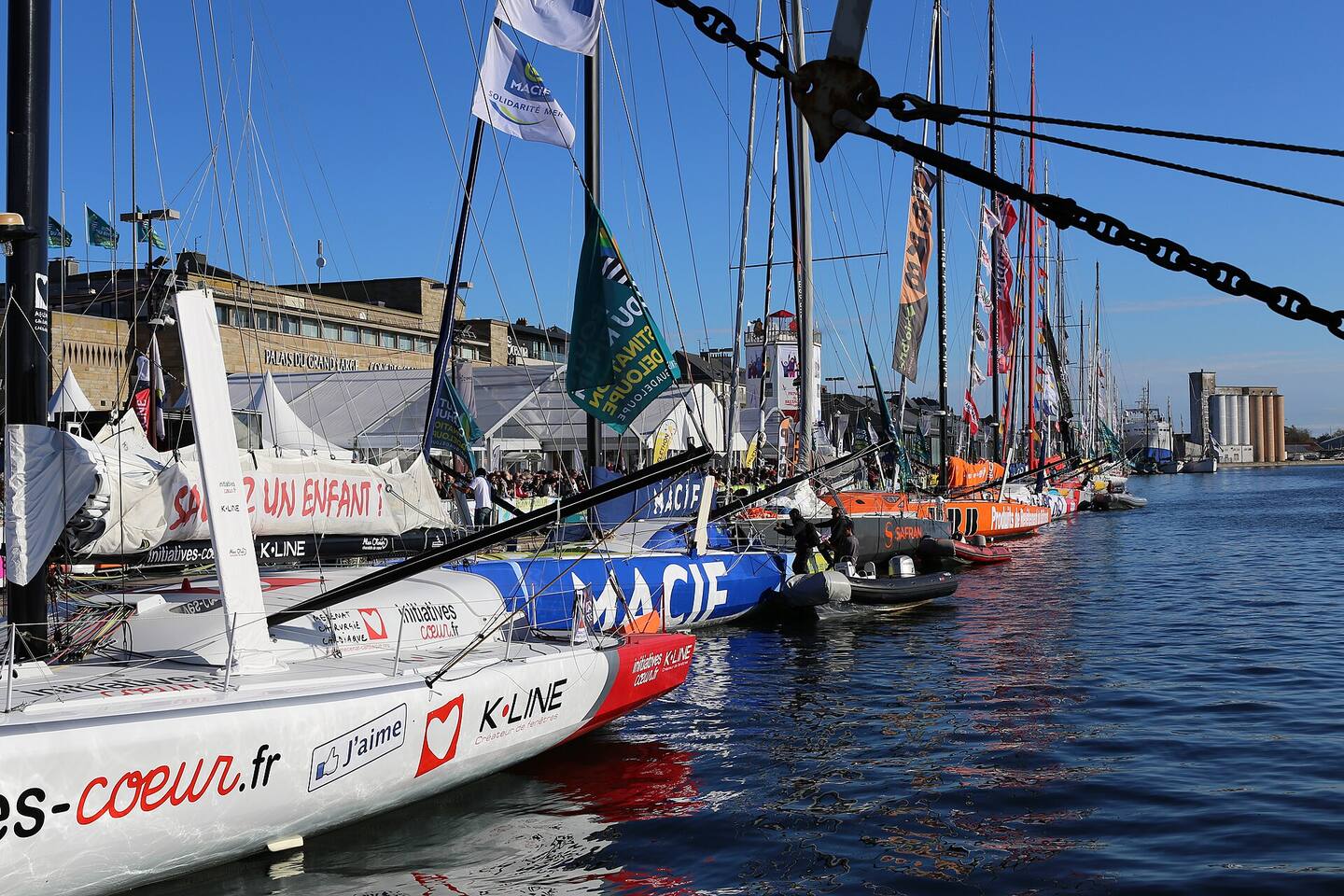
The Ocean Race Atlantic is a new, single-stage transatlantic race from New York to Lorient, held for the first time in September 2026. Six foiling IMOCA monohulls are taking part, each with a four-person crew of two women and two men plus an onboard reporter. As this piece goes out, the fleet is still at sea.
This piece is written while the race is still running, so results are given with a date attached and with their source. The finishing order may end up looking different — what cannot be confirmed today, we do not write.
A new race, an old organiser
The format is different from the round-the-world race the name The Ocean Race is usually attached to. Instead of a months-long expedition split into legs, there is one unbroken stretch across the Atlantic — a sprint with no next port in which to claw back losses. The ceremonial start and parade took place on 2 September in New York harbour, and the race itself began on 3 September at 10:00 Eastern (14:00 UTC) from a virtual line about 150 nautical miles offshore.
The distance is quoted differently in different places: World Sailing gives 3,000 nautical miles, some trade coverage 3,200. The gap comes from the fact that the great-circle distance and the route a boat actually sails are two different numbers, and the second one depends on the weather. The finish is in Lorient in Brittany, where the Ocean Live Park fan zone runs from 9 to 13 September; the organisers expected the first boats on 8 or 9 September.
Conditions at the start were awkward: 17–18 knots of north-easterly wind, a 0.8-metre sea and a close-hauled course on which the boats were making 15–18 knots. “The next few hours will be very important while the fleet is still close together,” said Sara Stone of United by the Ocean before the start.
Six crews on the start line
The field is small but strongly manned — mostly names known from the Vendée Globe and from earlier round-the-world editions.
- United by the Ocean
skippers Paul Meilhat and Mariana LobatoFRA / POR - Team Malizia
skipper Boris Herrmann, on the new Malizia 4GER - Team Francesca Clapcich Powered by 11th Hour Racing
skipper Francesca ClapcichUSA - Embrace the Challenge
skipper Oliver HeerSUI - DMG MORI Sailing Team
skipper Kojiro ShiraishiJPN - MSIG Europe
skipper Conrad ColmanNZL
How the race looks — the picture on 6 September
After the first forty hours Malizia 4 led by 13.4 nautical miles from United by the Ocean, with about 2,475 miles still to run. By 6 September the picture had grown more complicated: Malizia was still first but clearly slower than the boats chasing her. The four-hour average speeds then looked like this:
- Team Francesca Clapcich / 11th Hour Racing
fastest boat in that measurement window17.0 kn - United by the Ocean
just behind the pace setter16.7 kn - DMG MORI Global One
on the eastern edge of the fleet15.1 kn - Team Malizia
leading, but losing pace on the northern route11.7 kn
Then came the breakages. Two nights earlier the Malizia crew had been fighting a leak in a ballast tank, and MSIG Europe lost around 30 miles to a headsail furler failure. Malizia did manage to win the second “Super Sprint” — a twenty-minute speed test run during the race to give followers something to hold on to in the middle of a multi-day passage.
Tactically the key is the high pressure near the Azores. If it behaves as forecast it will squeeze the fleet together and wipe out part of the advantage built up out on the ocean. “We'd like to get into some reaching and downwind conditions, but that should come!” said Nicolas Lunven of DMG MORI Global One.
Malizia 4 — a new boat in her first race
The most interesting technical thread of this edition is the boat's debut. Malizia 4 was launched about two months before the start, designed by Koch-Finot-Conq, and The Ocean Race Atlantic is her first race of any kind. Going straight from the shed to the Atlantic is a serious risk — and the tracker data shows exactly where that risk sits.
Upwind the new boat really is quicker: in the opening phase she averaged 17.0 knots over the ground against 15.5–16.4 for her rivals. In light air the advantage disappears — across 39 ten-minute measurement windows the average speed was practically identical to the older Malizia–Seaexplorer, which now races in 11th Hour Racing colours. In top speeds the new boat was even behind: 26.8 knots against 27.3–27.9 for the competition. The “ten percent faster” claim repeated before the start is not yet borne out by the numbers.
It is also worth remembering where the early lead came from: Malizia was sailing about 24 miles further north and found better wind. That was not the boat alone but a navigational decision — and in offshore racing those weigh as much as the hull.
Crews split down the middle
The rules require two women and two men on board every boat, plus an onboard reporter. It develops a direction The Ocean Race has been testing for several editions: mixed crews used to be rewarded with a larger headcount, now parity is simply a condition of entry. The round-the-world race in 2027 is to use a milder version of the rule — at least one female sailor in the crew at all times.
For a four-person IMOCA crew that is a real change, not a symbolic one. With that few people on board there is no room for a specialist hired for muscle — everyone has to do everything, from reefing to repairs in the middle of the night.
From Whitbread 1973 to today
The name The Ocean Race is young, but the event itself is fifty-three years old and has carried three different banners. It is run every three or four years.
- 1973
first edition as the Whitbread Round the World Race, named after the British brewerStart - 1993–94
the one-design Whitbread 60 arrives — the end of racing boats of any design against each otherOne-design - 2001
Volvo takes over the sponsorship and the race becomes the Volvo Ocean RaceVolvo - 2019
the current name, The Ocean RaceNew name - 2021
the IMOCA 60 class is introduced alongside the Volvo Ocean 65IMOCA - 2023
start in Alicante, finish in Genoa; 11th Hour Racing Team wins the IMOCA classLast lap
Records worth knowing: the Netherlands has the most wins, three. Conny van Rietschoten remains the only skipper with two victories, and Steinlager 2 the only yacht to win all six legs of a single edition.
The Polish thread: WindWhisper in 2023
The last round-the-world edition had a Polish thread that got surprisingly little attention at home. WindWhisper Racing Team, sailing under the Polish flag, won the VO65 Sprint Cup, taking all three stages in the class.
The finale was the strongest part. On the last leg from The Hague to Genoa, WindWhisper crossed the line at 10:27:52 UTC on 26 June 2023, after 10 days, 23 hours, 17 minutes and 52 seconds of sailing, more than eighteen hours ahead of the rest of the fleet. She was faster not only than her class rivals but than the IMOCA boats too — newer, more expensive and in theory quicker designs. The team was led by Pablo Arrarte, and on the final leg, when he could not sail, Daryl Wislang took over as skipper.
It is a good reminder that in offshore racing the equipment is not the whole answer. An older, heavier boat beat newer ones on that leg because her crew worked the weather better.
What comes next: around the world in 2027
The Ocean Race Atlantic is a warm-up for something much bigger. The fifteenth edition of the round-the-world race starts on 17 January 2027 from Alicante — the sixth time in a row from the same port, home to the race headquarters and its museum.
The opening is unprecedented: the first leg runs from Alicante straight to Auckland and covers 14,000 nautical miles — halfway around the world without a port call. It is the longest opening leg in the history of the race. The route then goes on to Itajaí in Brazil, a port in the United States, a port in Europe and the finish in AMAALA on the Red Sea; the two middle stopovers had not been announced when this was published. The boats will be IMOCAs.
“The 2027 edition raises the bar once again with a route that will challenge even the most accomplished sailors,” said Richard Brisius, the race chairman. Boris Herrmann, currently leading on the Atlantic, put it briefly: “This is an amazing way to start The Ocean Race: with an epic leg that takes us halfway around the world.”
How to follow it, and why bother
Offshore racing is currently one of the best places to see where yacht engineering is heading. Foils, energy systems, materials and deck hardware tested on IMOCAs filter down to cruising boats within a few years — much like the solutions shown at the boat shows. If that other side of the industry interests you, we covered it in our report from the Cannes Yachting Festival 2026.
The race itself has a public tracker with boat positions and the telemetry most analysis rests on — including the figures quoted above. That is rare in sport: the follower has access to the same numbers as the journalist.
Related material
- Cannes Yachting Festival 2026 — the show report
- All world news
- Builder and boatyard directories
- Boat & Yard guides
- Charter — planning a trip
In brief
- First edition of The Ocean Race Atlantic: New York to Lorient, started 3 September 2026
- Six IMOCA yachts, crews of two women and two men plus an onboard reporter
- On 6 September Malizia 4 was leading, but the boats behind were clearly faster
- Malizia 4 is racing for the first time — the tracker data does not confirm the promised 10% advantage
- In 2027 the round-the-world race leaves Alicante on a 14,000-mile leg to Auckland
Sources
Accessed: 7 September 2026. The Ocean Race Atlantic 2026 — organiser's website, World Sailing, report from the start (03.09.2026), World Sailing, the battle at the front (06.09.2026), YACHT, tracker data on Malizia 4 (04.09.2026), The Ocean Race, the 2027 route (21.01.2026), The Ocean Race, the 2027 start date, The Ocean Race, WindWhisper wins the VO65 Sprint Cup, The Ocean Race — editions and classes